Copper briefly traded above USD 14,500 per tonne in January 2026, an all-time high. It had only crossed USD 12,000 for the first time a month earlier. Between January 2025 and April 2026, the IEA logged base metal prices including aluminium, copper and tin rising by roughly a third.
Prices like that normally trigger one response: dig faster. But the constraint in Canadian mining right now is not capital and it is not demand. It is the number of people available to run the equipment, and there is no price signal that fixes that quickly.
At PDAC 2026 and CIM CONNECT, our team heard a recurring theme from operators and suppliers: maintaining throughput while working around aging systems, labour shortages and unplanned downtime. That combination is worth taking apart, because it points somewhere different from where most mining automation coverage is looking.
The labour math doesn’t work
The Mining Industry Human Resources Council puts the hiring requirement at about 191,000 workers over the next decade just to cover new roles, retirements and turnover. Under a combined recession-and-expansion scenario, that figure climbs to 256,000. Unemployment inside mining and quarrying has run between four percent and under one percent for four straight years, which is what a chronic shortage looks like in the data rather than in a press release.
The pipeline behind it is thinner still. The share of mining workers under 25 has fallen to roughly six percent, with retirements accelerating.
In June 2026 the federal government responded by launching the Mining and Minerals Workforce Alliance, the first of six planned sector workforce alliances, led by MiHR with support from the Mining Association of Canada. When a labour gap gets its own national body, it has stopped being a forecast.
Ontario is where this lands first
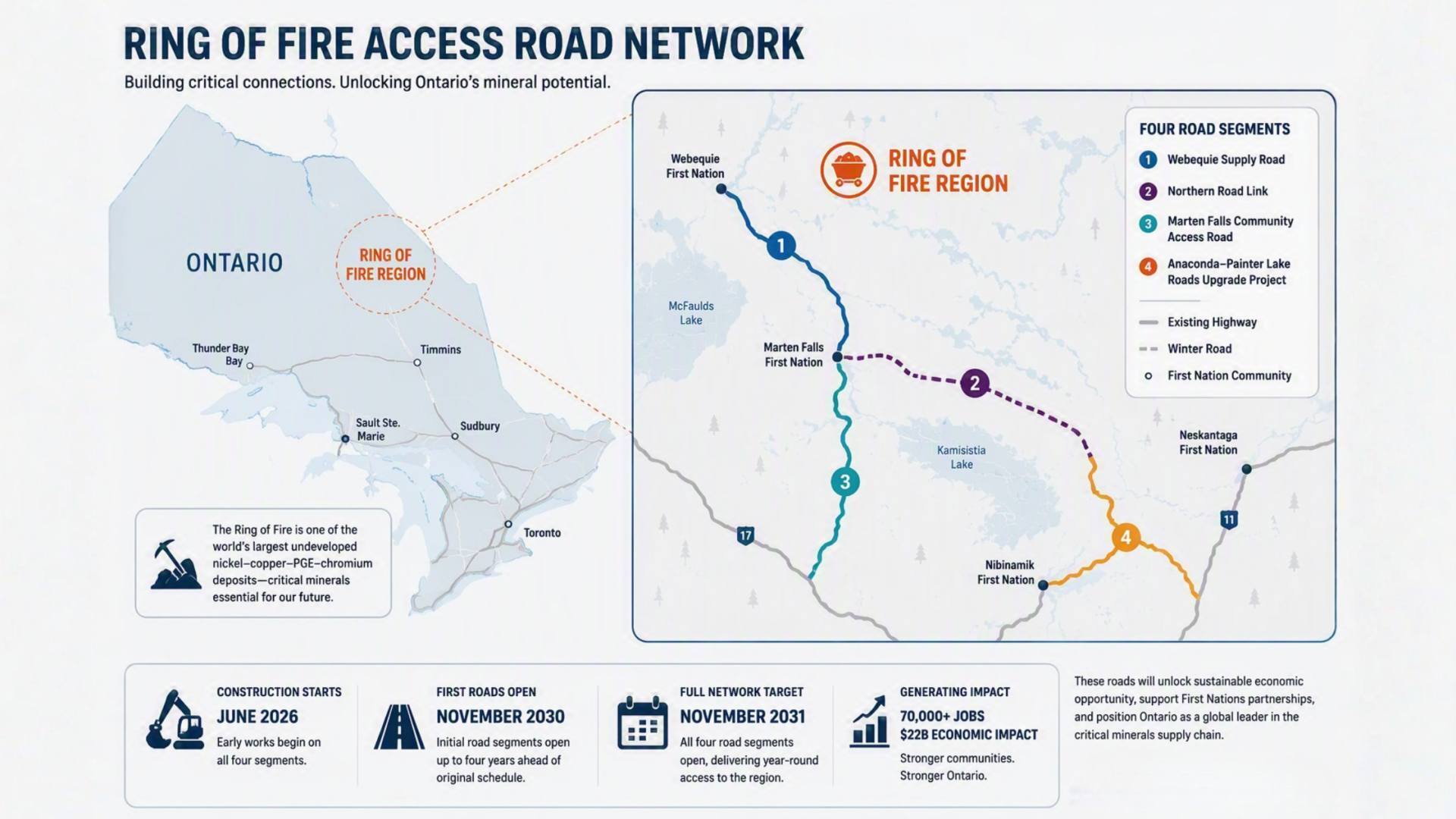
Ontario’s mining sector supports close to 150,000 people and exported $64 billion in mineral and metal products in 2023, $42 billion of it to the United States.
The forward pipeline is now moving. Premier Doug Ford announced at PDAC in March that road access to the Ring of Fire would be built years ahead of the original schedule, with corridors expected in place by November 2031. The first shovel went in on June 2, 2026, at the $81.3 million Main Street rehabilitation in Geraldton. Federally, the Critical Minerals Production Alliance has mobilised $18.5 billion in Canadian projects across two rounds of partnerships.
Notice where the provincial money is pointed. Ontario has committed $500 million to a new Critical Minerals Processing Fund, with applications open until August 25, 2026. Processing, not extraction.
The opportunity may not be in the mine
That distinction is the whole argument. Work the list of what happens after the ore leaves the ground:
- Processing
- Material handling
- Assembly
- Traceability & data collection
- Packaging
- Testing
None of that looks like a mine. All of it looks like a factory, and factories are where automation integrators have spent the last three decades.
The gap is integration, not autonomy
The autonomous haulage story is largely settled. Level 4 fleet autonomy lets one remote supervisor oversee up to 15 trucks and lifts truck utilization by around 15 percent, and that territory belongs to Caterpillar, Komatsu, Sandvik and Hexagon.
The interesting movement is elsewhere in the same data. Fleet-management and predictive-maintenance software is growing at 11.07 percent annually, outpacing both hardware and services. And services are the fastest-growing segment of the mining automation market because operators lack the in-house expertise to deploy and sustain complex automation. Deployment is not a one-time capital event. It is integration, remote monitoring, and continuous support against equipment that was commissioned decades apart.
Cost structure is shifting in the same direction. After China curbed sulphuric acid exports in May 2026, the IEA found acid costs overtaking energy costs as the single largest cost component in processing some critical minerals. Efficiency downstream of the pit is now doing more for margin than tonnage upstream.
What this actually looks like on a floor
Abstractions are easy. Here is a specific one.
Across mining supply chains the same profile keeps appearing: battery modules, hydraulic manifolds, filtration systems, sensor assemblies, drill components and other high-mix, traceability-driven subassemblies. Low volume, high precision, built by hand today, and dependent on a workforce that is retiring faster than it is being replaced.
Take one of them for example; underground fleets across Northern Ontario are electrifying, and every battery-electric loader, bolter and hauler needs battery modules assembled to automotive standards. A module assembly cell for underground BEV packs would typically run something like this:
- Cell inspection and binning. Vision system checks each cell for surface defects and reads the DMC. Cells are binned by measured internal resistance so that modules are built from matched sets rather than nominal ones.
- Thermal interface application. A robot applies thermal interface tape or dispensed gap filler to the cooling plate at a controlled bead width, with in-line laser profilometry confirming coverage before the stack goes down. Manual application is where thermal performance quietly walks away from spec.
- Stacking and compression. Servo-controlled press builds the stack to a target compression force rather than a target position, since cell thickness varies lot to lot.
- Busbar welding. Laser or ultrasonic welding with post-weld resistance verification on each joint.
- Fastening and test. Torque-to-angle fastening with every value logged, then end-of-line insulation resistance and open-circuit voltage checks.
- Genealogy write-back. Every cell serial, weld result, torque value and test reading is written against the module serial and pushed to the plant MES.
The traceability layer is the part worth arguing about. When a module fails at 4,000 hours underground, the question is not whether it failed. It is which cell lot, which weld head, which shift. A cell without genealogy gives you a warranty claim. A cell with genealogy gives you a root cause and a containment boundary.
Where we are in this
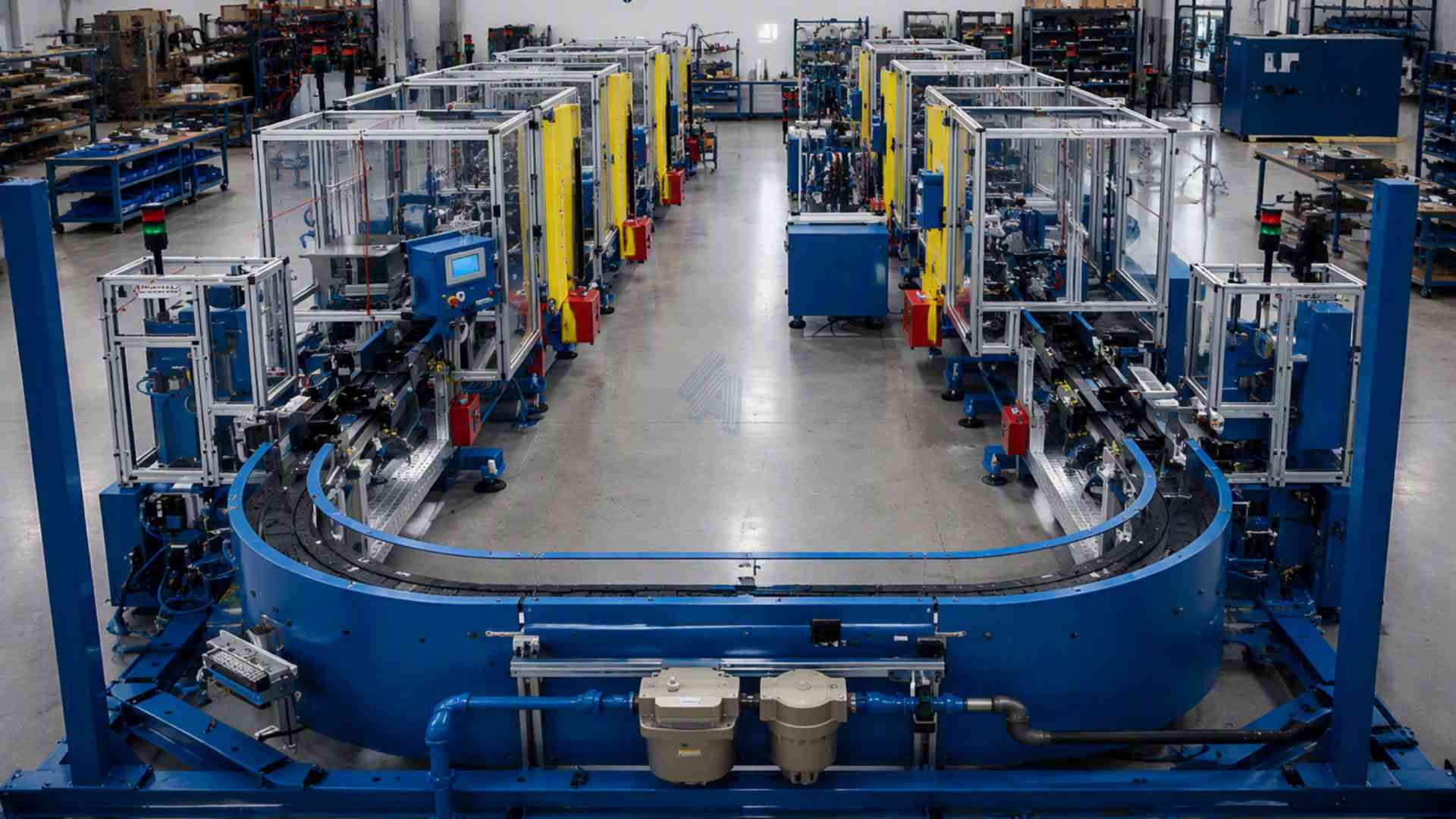
Innovative Automation builds custom automation systems for automotive and industrial manufacturers with a focus on reliability, traceability and ease of maintenance. Challenges in the mining sector can be solved with carefully planned and executed automation designs, something we know well.
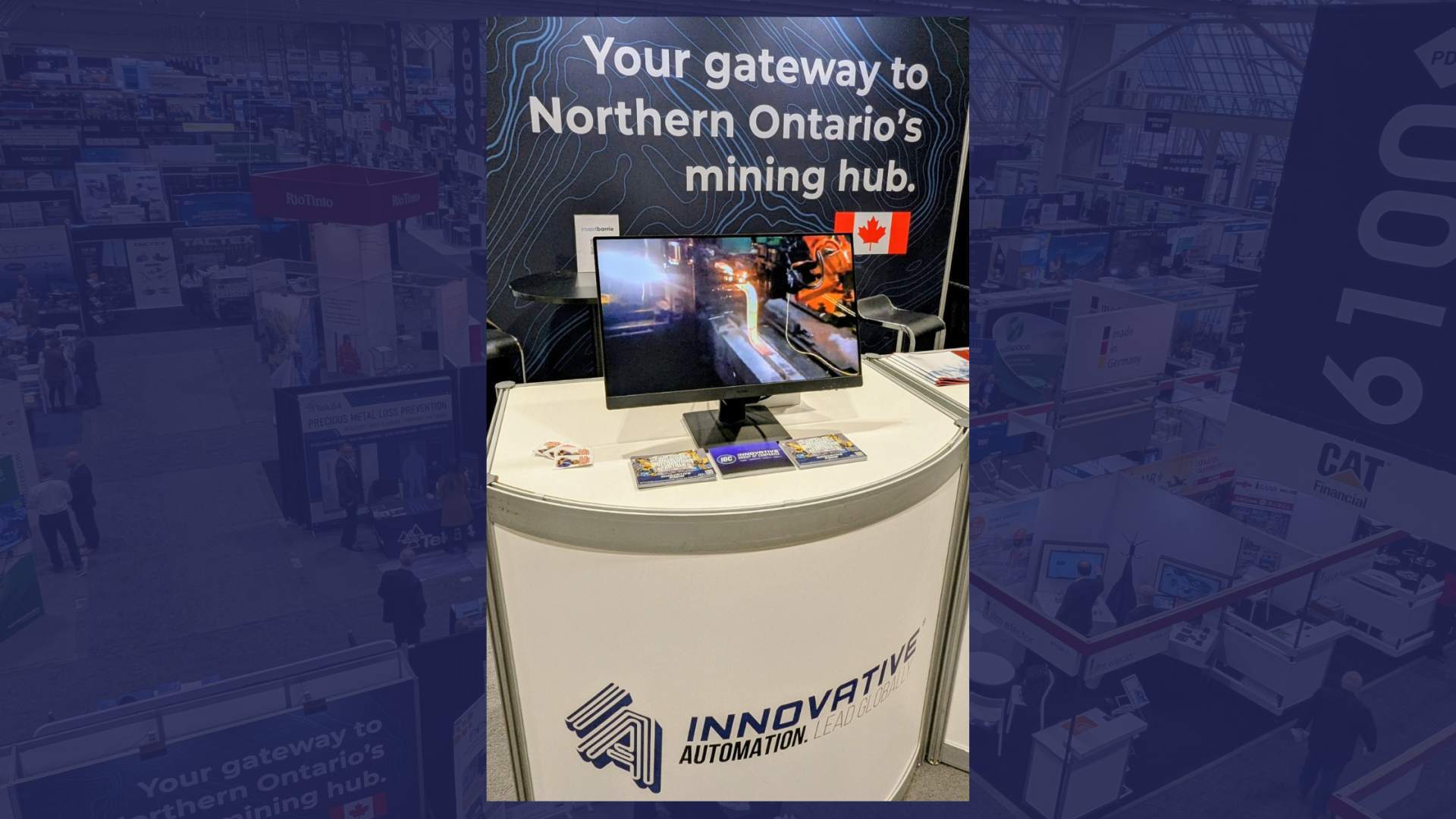
Our team was at PDAC 2026, which drew a record 32,155 participants and more than 1,300 exhibitors, and at CIM CONNECT, talking with operators and suppliers about throughput, aging systems and unplanned downtime. The pattern in those conversations was consistent, and it was not about autonomy. It was about making equipment from four different vendors and three different decades behave like one system.
If you are working through something similar, we would like to hear about it – Contact Us.