Every automation system we build begins the same way: with solid material.
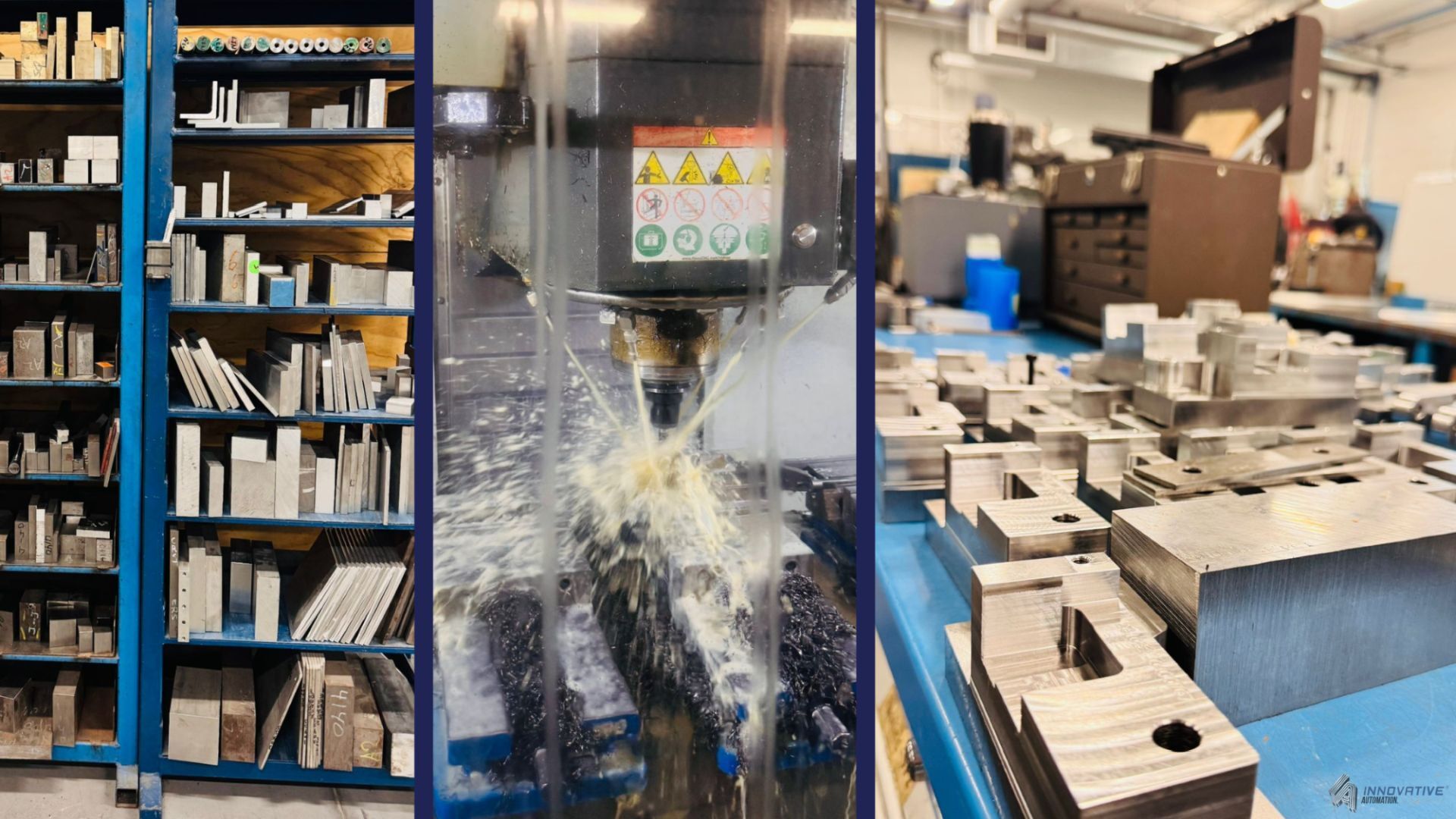
Aluminum blocks, steel stock, and extrusions are staged on the shop floor in oversized form, selected based on the requirements of each component. At this stage, nothing is close to finished. Each piece represents potential, material that will be reduced, shaped, and defined through machining.
That transformation happens in Innovative Automation’s full-service, in-house machine shop, where CNC lathes, multi-axis mills, and material prep all live under one roof.
From Raw Stock to Finished Component
Once engineered drawings and CAD files are released to production, material is first selected in the material preparation area and transferred into our dedicated machining area, where it is processed using a subtractive approach. We use both CNC and conventional milling machines, depending on the requirements of the component and the stage of the process.
Material is removed in stages starting with roughing passes to eliminate the bulk stock, followed by finishing passes to bring the component into its final geometry and tolerance. The shop is equipped with both 3 and 5 axis milling machines that allow complex features and surfaces to be sculpted, ensuring parts meet both dimensional and functional requirements.
What starts as a solid block is progressively reduced into a precise component, ready to be integrated into a larger automation system.
In subtractive machining, material removal isn’t incidental. It is the process itself.
Why Keeping This Process In-House Matters
Maintaining machining capability internally changes how projects move.
When parts are produced in-house, adjustments can be made immediately. If a component requires modification, replacement, or refinement during assembly, it does not need to be re-ordered or outsourced. It can be addressed directly on the shop floor.
This reduces delays, improves coordination between design and build, and allows issues to be resolved in real time.
For customers, this translates into a more predictable build process and reduced exposure to external lead times.
What Gets Removed
As material is machined, excess stock is continuously removed.
This includes:
- Chips and turnings
- Fine swarf mixed with coolant
- Offcuts from raw stock
Depending on the complexity of the part, a significant percentage of the original material may be removed before the final geometry is achieved.
In traditional CNC machining, it is common for 15–30% of the original material to become scrap as part of the process.
This is not inefficiency. It is the nature of precision machining to create high quality parts.
Material Recovery as Part of the Process
Rather than being treated as waste, this material is managed as part of the production cycle.
Scrap is collected, sorted, and separated by material type, including steel, aluminum, and copper. Maintaining clean separation is essential to ensure that materials can be effectively recycled and returned to the supply chain.
In 2025, our Barrie facility recovered 46,935 lbs of metal, diverting it from landfill and reintroducing it into industrial use.
This is a direct result of consistent handling practices on the shop floor, not a one-time initiative.
The Role of Recycling in Canadian Manufacturing
At a broader level, this aligns with how manufacturing systems operate across Canada.
Canadian recyclers process between 16 and 18 million tonnes of scrap metal every year, making metal one of the largest and most established recycling streams in the country.
Scrap metal is not only recycled locally, it is also part of Canada’s export economy. In 2024 alone, the country exported approximately 4.6 million tonnes of steel scrap, representing billions in material value moving through the industrial supply chain.
This reflects how integrated recycled material is within modern manufacturing. In many cases, steel production already relies heavily on scrap as feedstock, both in Canada and globally.
At the same time, Canada’s broader materials sector remains significant. The country’s minerals and metals industry generated over $64 billion in production value in 2024, reinforcing how central metal processing is to the economy.
Recycling plays a direct role in that system. It reduces reliance on raw material extraction, stabilizes supply, and lowers the energy required to produce new material. These benefits are particularly relevant in machining environments, where material removal is an inherent part of production.
For operations that machine material daily, recovery is not an exception. It is part of maintaining efficiency within the system.
Process, Responsibility, and External Assessment
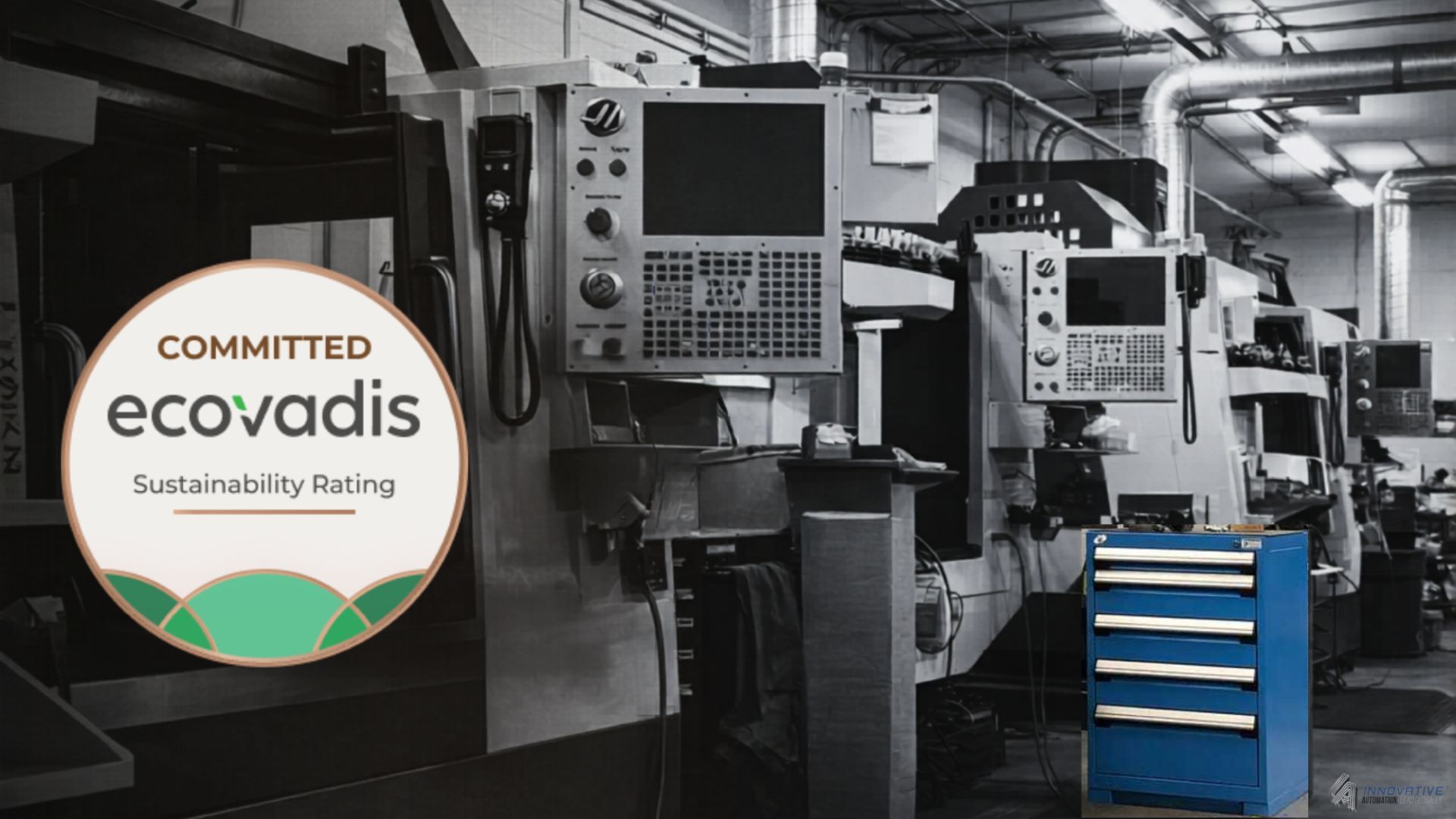
Internally, machining and material recovery are managed as part of the same workflow, from raw stock selection to finished components and the separation of reusable material.
This approach also aligns with how our operations are evaluated externally.
Innovative Automation holds an EcoVadis sustainability rating, an independent, third-party assessment widely used by global manufacturers to evaluate suppliers across environmental impact, labor and human rights, ethics, and sustainable procurement.
Unlike certifications, EcoVadis evaluates the quality of a company’s sustainability management system based on documented evidence, including policies, actions, and measurable results.
Assessments are structured across four core areas:
- Environment
- Labour & Human Rights
- Ethics
- Sustainable Procurement
For customers, particularly in sectors such as automotive and life sciences, this type of assessment provides additional visibility into how suppliers manage risk, compliance, and operational responsibility beyond the equipment itself.
Within our operations, this is not treated as a separate initiative, but as an extension of the same process discipline applied on the shop floor, how materials are used, how they are recovered, and how systems are maintained over time.
Earth Day Perspective
Earth Day often highlights large-scale environmental initiatives, but in manufacturing, impact is often built through consistent, process-level decisions.
Maintaining internal machining capability reduces dependency on extended supply chains and allows for more efficient use of materials. Recovering and recycling scrap ensures that material removed during production is not lost, but returned to use.
These are not standalone efforts. They are part of how the work is done, every day, on the shop floor.
If you have questions about how parts are manufactured, modified, or supported during a build, we’re always available to walk through the process.